Macronutrients made simple, how protein, carbs and fat build a plate that works

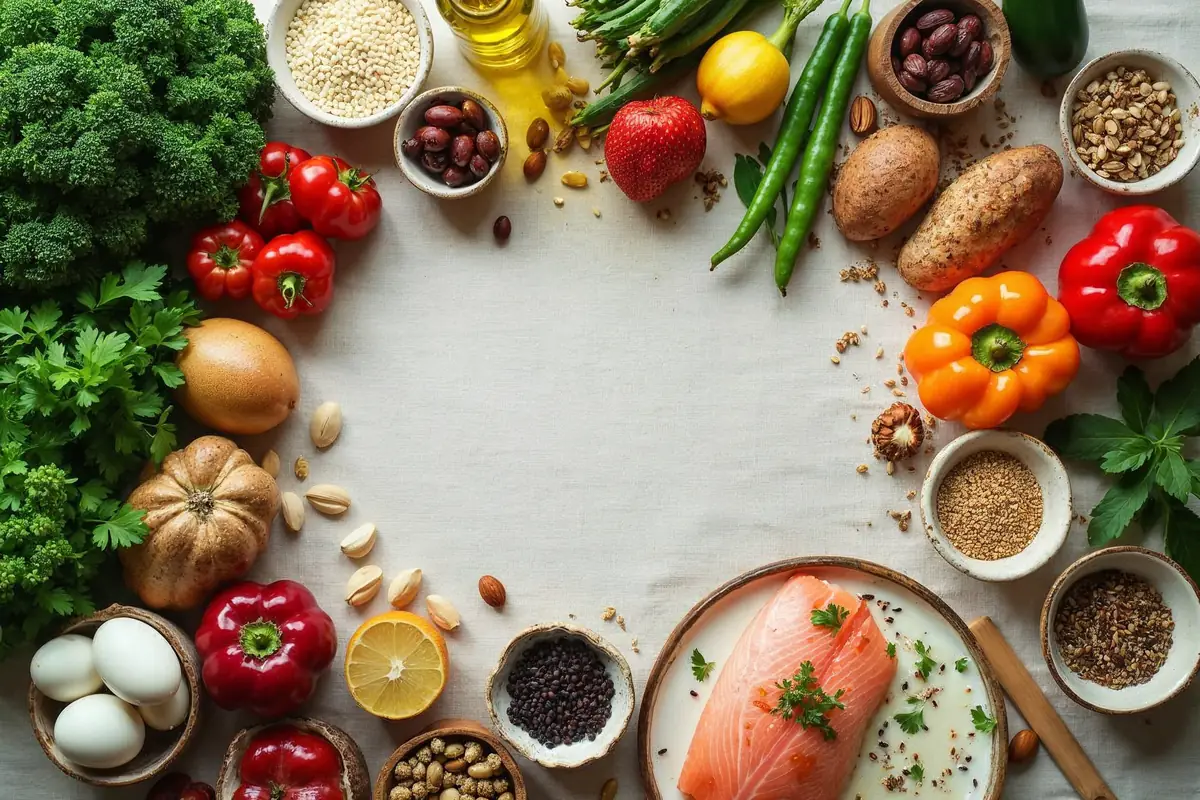
Macronutrients are the 3 parts of food that give you energy, namely protein, carbohydrate and fat. Your body needs all of them every day. Weight loss works better when you keep the 3 and adjust the amounts, rather than cutting 1 out.
A club coach goes through your situation with you and gives you practical advice.
Book your free assessmentIn this article
Macro and micro, the difference
Macro means large. You eat these nutrients in grams, and they carry calories. Micronutrients, the vitamins and minerals, are needed in milligrams or micrograms and carry no energy at all. We cover them in our guides to vitamins and what they do and to minerals in everyday food.
Energy per gram
- Protein gives about 4 kcal per gram.
- Carbohydrate also gives about 4 kcal per gram.
- Fat gives about 9 kcal per gram, more than double.
- Alcohol gives about 7 kcal per gram, with nothing else your body needs.
That is why a drizzle of oil or a knob of butter counts for so much, and why fat is worth measuring rather than banning.
What each 1 does for you
Protein contributes to the maintenance of muscle mass. It comes from fish, eggs, lean meat, dairy, beans, lentils and tofu. Our page on how much protein you need goes further.
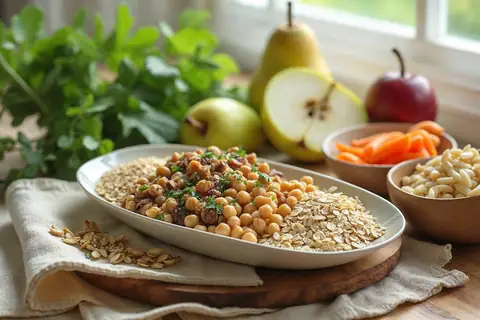
Carbohydrate is the main fuel for your brain and muscles. The better sources are the ones that bring fibre with them, like oats, potatoes in their skins, wholemeal bread and brown rice.
Fat carries the vitamins A, D, E and K and is part of every cell. The type matters more than the total.
Reading a label in 30 seconds
The back of the pack shows energy, fat, saturates, carbohydrate, sugars, protein and salt per 100g. The NHS guide on how to read food labels sets the thresholds. For example, more than 17.5g of fat per 100g counts as high. The traffic light panel on the front gives the same message at a glance.
Building a plate without a calculator
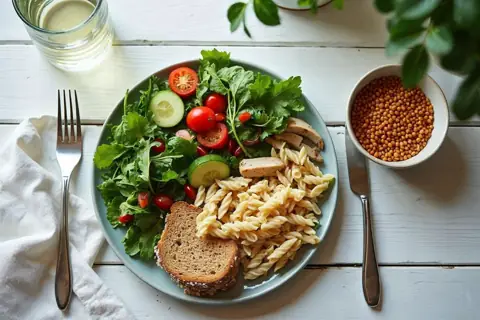
You do not need to count grams to eat well. Picture your plate in 4 equal parts. Give 2 of them to vegetables or salad, 1 to a protein food and 1 to a starchy food, then add a little oil or a few seeds. A lighter Lancashire hotpot made with lean lamb, plenty of carrot and onion and a thin layer of sliced potato on top fits that plate nicely.
The British Dietetic Association fact sheet on carbohydrates explains why starchy foods still belong on the plate, even when you want to slim down.
When needs change
Pregnancy, a long term condition or a heavy training load all change what you need. This article does not replace advice from your GP or another health professional, so ask them before making big changes.
Breakfast as practice
Breakfast is the easiest meal to balance, because it is the most repeated. Our club at 267 Brindle Road opens at 6am on weekdays, so members can sit down to a balanced breakfast before work. If you would like to see how your own plate looks, start with a free assessment.
Nutrient by nutrient





Your weight loss curve
Fill in your details and the curve updates instantly.
Going at the median rate, losing 8 kg would need roughly 11 weeks. Going at the slowest rate, roughly 4 months.
For weight that stays off, the figure usually quoted is 500 g to 1 kg each week. On the chart, this is the ideal band. Losing more than 1 kg a week, week after week, means the body burns muscle as well as fat. On the chart, this is the shaded band.
This projection is only a guide. Everyone’s path is different and outcomes differ between people. Everything is worked out on your own device, and nothing gets stored or transmitted. If you are over 65, check with your GP before anything else.
How this curve is calculated
The upper line of the band stands for 500 g each week, the slowest rate. The lower line stands for 1 kg each week, where risk begins.
Early weeks move quicker, largely through water loss, and then things settle down. From 40 onwards the median curve eases off bit by bit as metabolism winds down. Putting in equal effort, men tend to lose a touch faster than women.
As in real life, the curve includes short stalls lasting a few days and the odd small gain. It cannot forecast how your own path will go.
These tips are general guidance. A doctor’s opinion still comes first.
Further reading


Day-to-day support is explained in our programme for eating more healthily.