Weight loss in your 30s. Habits that fit careers, commutes and family


In your 30s weight usually creeps on because life fills up, not because your body suddenly fails you, so the answer is to build eating and moving into the routine you already have. Your 30s are a great time to set habits that will carry you through the next decades.
A club coach goes through your situation with you and gives you practical advice.
Book your free assessmentIn this article
Where the extra kilos come from
Very few people gain 10kg, about 1 stone 8lb, in a month. It arrives slowly. A promotion that means more hours sitting. A longer commute. Takeaways because nobody had time to shop. Weekend drinks that turn into Sunday fry ups. Each change is small. Together they add up.
Shift work and early starts
Many people around Bamber Bridge work shifts in the warehouses and depots near the M6 and the M61. Rotating hours make regular meals harder. A few tips help.
- Eat your main meal before your shift, not in the middle of the night.
- Take a packed lunch and a planned snack so the vending machine is not your only option.
- Keep the same meal pattern on days off where you can.
Moving more without a gym
Aim for movement that slips into the day. Park further away, take a walk at lunch, use stairs. The NHS Better Health get active page has free ideas and apps that fit around work and family. If you sit for long periods, stand up and move every 30 minutes. For a fuller restart, our fitness comeback plan builds up over 6 weeks.
The sleep factor
Young children, late screens and early alarms often cut nights short. Tired people tend to reach for sugary snacks and skip activity. A wind down routine, a fixed bedtime and keeping the phone out of the bedroom make a real difference. The NHS Every Mind Matters guide on how to fall asleep faster and sleep better gives practical steps. Our article on sleep and appetite explains the link with hunger.
Reading labels in a rushed shop
Ready meals and snacks are part of busy lives. Learn to read the front-of-pack colours. Mostly green and amber is a good sign. A meal with several reds is best kept for now and then.
Small targets that keep you going
Pick 1 habit per fortnight. Breakfast every day, then a packed lunch, then a 20 minute walk. Each habit makes the next habit easier.
Start the day with others
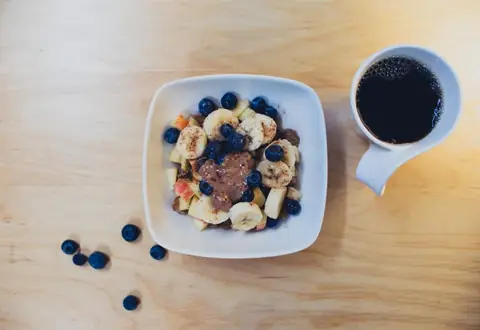
At Bamber Bridge Nutrition, members have breakfast at the club in the morning before work, from 6am on weekdays, which suits early starts and shift patterns. You can come for a free assessment and talk about what fits your week.
This article does not replace the advice of your GP or a health professional.
Your weight loss curve
Fill in your details and the curve updates instantly.
Going at the median rate, losing 8 kg would need roughly 11 weeks. Going at the slowest rate, roughly 4 months.
For weight that stays off, the figure usually quoted is 500 g to 1 kg each week. On the chart, this is the ideal band. Losing more than 1 kg a week, week after week, means the body burns muscle as well as fat. On the chart, this is the shaded band.
This projection is only a guide. Everyone’s path is different and outcomes differ between people. Everything is worked out on your own device, and nothing gets stored or transmitted. If you are over 65, check with your GP before anything else.
How this curve is calculated
The upper line of the band stands for 500 g each week, the slowest rate. The lower line stands for 1 kg each week, where risk begins.
Early weeks move quicker, largely through water loss, and then things settle down. From 40 onwards the median curve eases off bit by bit as metabolism winds down. Putting in equal effort, men tend to lose a touch faster than women.
As in real life, the curve includes short stalls lasting a few days and the odd small gain. It cannot forecast how your own path will go.
These tips are general guidance. A doctor’s opinion still comes first.
Further reading

Day-to-day support is explained in our programme for eating more healthily.