Fitness comeback. How to get moving again after months or years off


The safest way to get fit again after a long break is to start smaller than you think, walk briskly most days, add 2 short strength sessions a week and increase the effort only when the current level feels easy. Most comebacks fail because people restart where they stopped years ago.
A club coach goes through your situation with you and gives you practical advice.
Book your free assessmentIn this article
Forget the old you for now
Maybe you played Sunday league, ran a half marathon or never missed a class. Your memory says you can still do it. Your joints and lungs may disagree. Treat the first month as a test drive, not a challenge. The UK Chief Medical Officers set out in their physical activity guidelines that some activity is good and more is better, so even 10 minutes counts at the start.
A gentle 6-week plan
Weeks 1 and 2
Walk briskly for 15 to 20 minutes on 5 days. Choose a pace where you can talk but not sing. A loop through Cuerden Valley Park or along the Ribble is perfect. On 2 days, add a short session at home. 10 sit to stands from a chair, 10 wall press ups and a 20 second plank on your knees.
Weeks 3 and 4
Stretch the walks to 30 minutes and add a few faster stretches between lamp posts. Repeat the home session twice, aiming for 2 rounds instead of 1.
Weeks 5 and 6
Try something new. A cycle on a section of the Guild Wheel, a swim, a beginners class. The NHS Couch to 5K running plan is a free and well paced option if running appeals. Before every session, take 5 minutes to warm up as the NHS shows in its warm up routine.
Food that supports a comeback
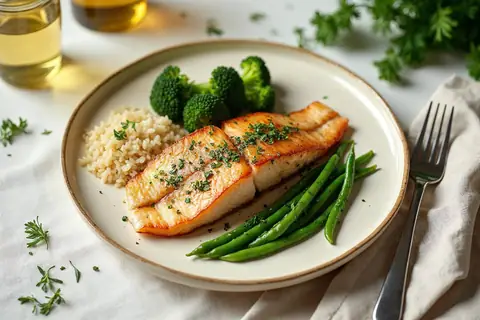
Restarting exercise is not a reason to eat for 2. It is a reason to eat well. Have a proper breakfast so you are not running on empty, include protein at each meal to help your muscles, and keep starchy carbohydrates such as oats, potatoes and wholegrain bread in sensible portions around active days. Drink water through the day. Our guide to how much protein you need gives practical amounts.
Signs to slow down
- Pain in a joint that lasts beyond the next day.
- Feeling exhausted rather than pleasantly tired.
- Poor sleep after sessions.
Any of these means you should hold the current level for another week. Chest pain, dizziness or unusual breathlessness are a reason to stop and call your GP straight away.
The morning crowd
At Bamber Bridge Nutrition, the club opens from 6am on weekdays, and members often fit a walk around their breakfast there before heading to work. Having people expect you is a strong reason to keep turning up. A free assessment is a calm way to set your starting point. For the bigger picture on strength, see why muscle matters.
This article does not replace a check with your GP or a health professional, especially if you have a heart condition or have not exercised for years.
Moving and recovering



Your weight loss curve
Fill in your details and the curve updates instantly.
Going at the median rate, losing 8 kg would need roughly 11 weeks. Going at the slowest rate, roughly 4 months.
For weight that stays off, the figure usually quoted is 500 g to 1 kg each week. On the chart, this is the ideal band. Losing more than 1 kg a week, week after week, means the body burns muscle as well as fat. On the chart, this is the shaded band.
This projection is only a guide. Everyone’s path is different and outcomes differ between people. Everything is worked out on your own device, and nothing gets stored or transmitted. If you are over 65, check with your GP before anything else.
How this curve is calculated
The upper line of the band stands for 500 g each week, the slowest rate. The lower line stands for 1 kg each week, where risk begins.
Early weeks move quicker, largely through water loss, and then things settle down. From 40 onwards the median curve eases off bit by bit as metabolism winds down. Putting in equal effort, men tend to lose a touch faster than women.
As in real life, the curve includes short stalls lasting a few days and the odd small gain. It cannot forecast how your own path will go.
These tips are general guidance. A doctor’s opinion still comes first.
Further reading

Day-to-day support is explained in our programme for eating more healthily.