Carbs and weight loss, why bread, rice and potatoes can stay on your plate

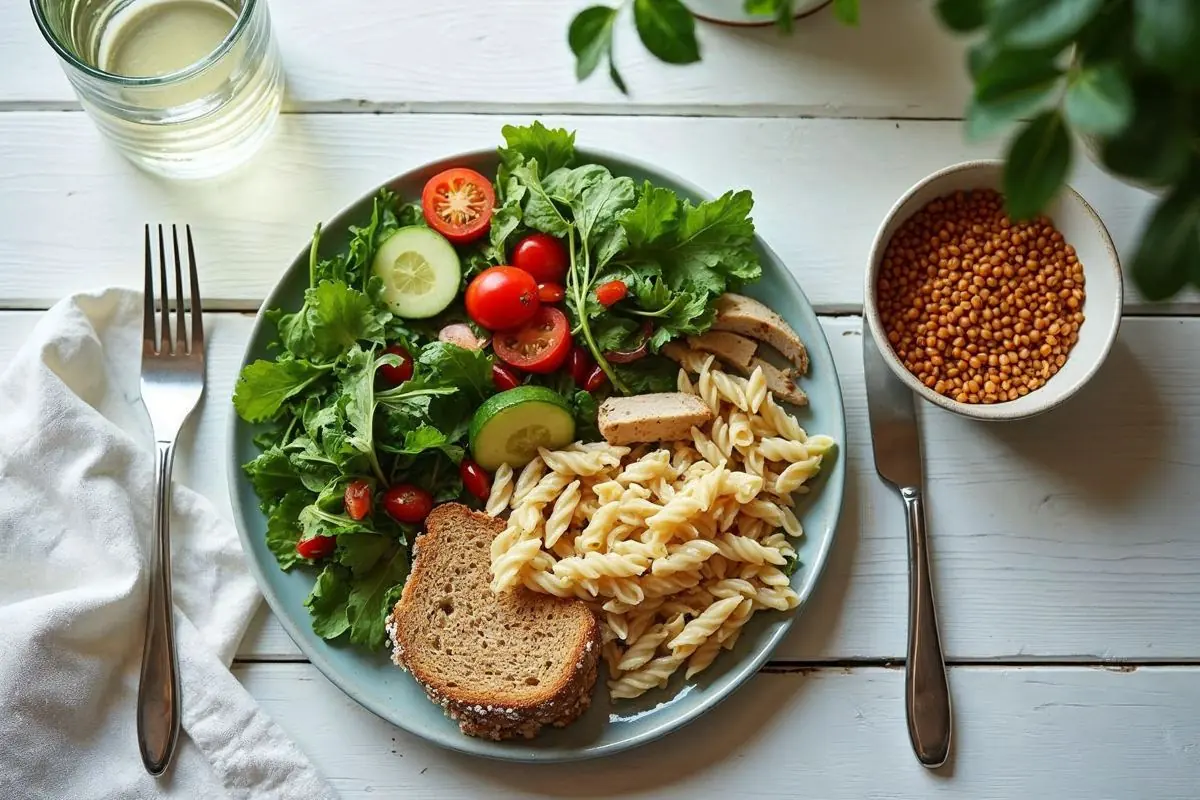
You can lose weight and keep carbs on your plate, as long as you pick high fibre versions and keep an eye on portions and toppings. Gram for gram, starchy food carries well under 50% of the calories of fat. It is usually the butter, cheese, cream and oil that come with it that tip the balance.
A club coach goes through your situation with you and gives you practical advice.
Book your free assessmentIn this article
Where the calories really come from
A medium baked potato has around 200 kcal. Add a big knob of butter and a handful of grated cheese and it can double. A bowl of pasta in tomato sauce is a modest meal, while the same pasta in a creamy carbonara is a different story. The British Dietetic Association fact sheet on carbohydrates explains why cutting carbs is not needed for weight loss.
A fist, not a mountain
A simple portion guide is the size of your fist for cooked rice, pasta or potatoes, or 2 slices of bread. Fill the rest of the plate with vegetables and a protein food. If you are very active, on your feet all shift or cycling the Guild Wheel at the weekend, you may need a bit more.
Swaps that add fibre
- White bread becomes wholemeal or granary.
- White rice becomes brown rice, or a mix of both while you get used to it.
- Peeled mash becomes crushed new potatoes with the skins on.
- Sugary cereal becomes porridge oats or wholewheat biscuits with no added sugar.
- Chips from the chippy become oven wedges with a little oil, most of the time.
Our guide to high-fibre foods lists more options.
Sugar and starch are not the same
Free sugars, in fizzy drinks, sweets, cakes and biscuits, are the carbs to cut first. Adults should have no more than 30g of free sugars a day, about 7 cubes. Starchy foods like oats, potatoes and wholegrain bread are a different matter. Government advisers set both targets together, more fibre and less free sugar.
Cooking tips
Cook potatoes, toast and chips to a golden colour, not dark brown. The Food Standards Agency explains on its page about acrylamide that over browning starchy foods produces this chemical. Leftover rice should be cooled quickly, kept in the fridge and eaten within a day.
Carbs and diabetes
If you have diabetes, the amount and timing of carbs matters for your blood sugar. Diabetes UK explains this in its guide to carbohydrates and diabetes. This article does not replace advice from your GP or another health professional, who can adapt the advice to your treatment.
Why dropping carbs rarely lasts
Cutting all carbs makes the scales drop fast at first, mainly from water. Most people then miss their toast and potatoes and give up. Our article on how to stop yo-yo dieting explains that cycle. A breakfast of porridge or wholemeal toast, eaten together at the club before work, is how many of our members start the day, with coaches trained in nutrition at their side. Ask about it at your free assessment.
Your weight loss curve
Fill in your details and the curve updates instantly.
Going at the median rate, losing 8 kg would need roughly 11 weeks. Going at the slowest rate, roughly 4 months.
For weight that stays off, the figure usually quoted is 500 g to 1 kg each week. On the chart, this is the ideal band. Losing more than 1 kg a week, week after week, means the body burns muscle as well as fat. On the chart, this is the shaded band.
This projection is only a guide. Everyone’s path is different and outcomes differ between people. Everything is worked out on your own device, and nothing gets stored or transmitted. If you are over 65, check with your GP before anything else.
How this curve is calculated
The upper line of the band stands for 500 g each week, the slowest rate. The lower line stands for 1 kg each week, where risk begins.
Early weeks move quicker, largely through water loss, and then things settle down. From 40 onwards the median curve eases off bit by bit as metabolism winds down. Putting in equal effort, men tend to lose a touch faster than women.
As in real life, the curve includes short stalls lasting a few days and the odd small gain. It cannot forecast how your own path will go.
These tips are general guidance. A doctor’s opinion still comes first.
Further reading
Day-to-day support is explained in our programme for eating more healthily.