High-fibre foods, a full day from breakfast to tea

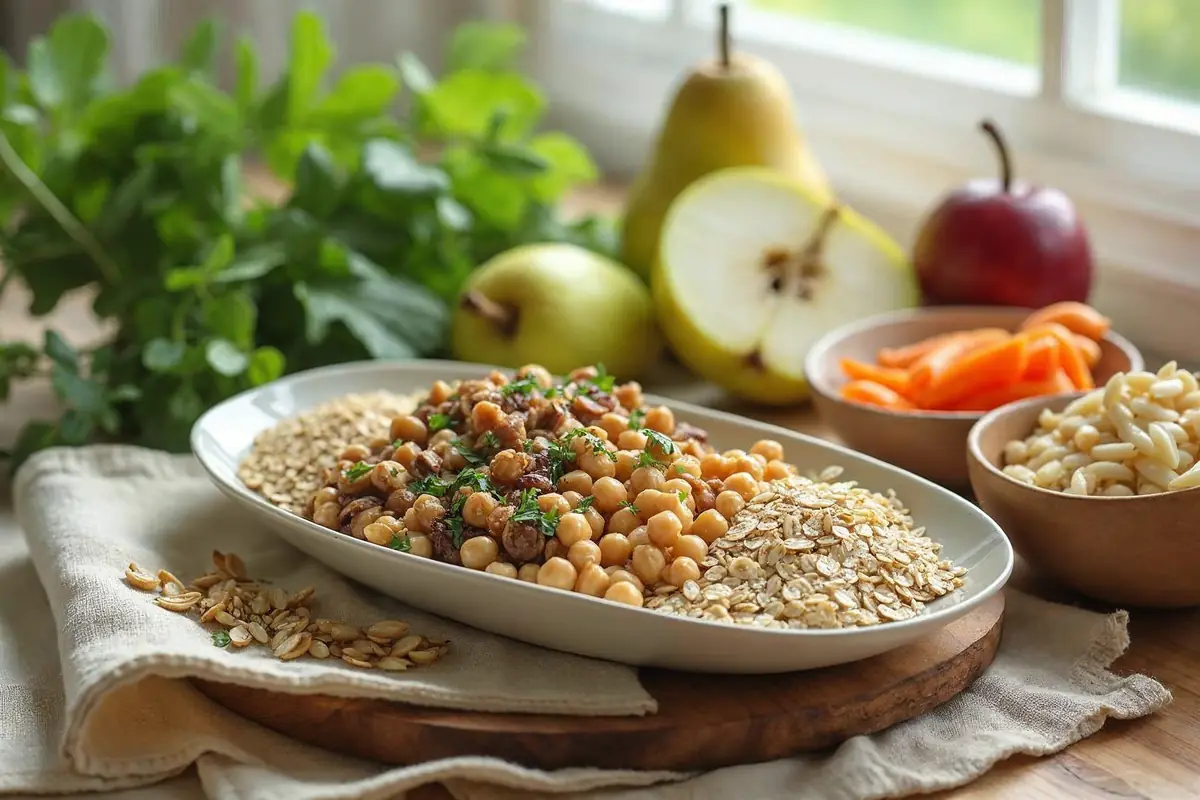
UK adults are advised to eat 30g of fibre a day, and most of us manage only about 17g. The gap closes when every meal brings a little, not with 1 giant bowl of bran. Oats, beans, wholemeal bread, potatoes in their skins, fruit and veg do most of the work.
A club coach goes through your situation with you and gives you practical advice.
Book your free assessmentIn this article
Why fibre is worth chasing
The British Heart Foundation guide to fibre sets out the 30g target and the average shortfall. For weight loss, fibre helps in a practical way. Fibre rich foods take longer to chew, add volume to the plate and come with fewer calories for the same portion. Oat beta glucan contributes to the maintenance of normal blood cholesterol levels, from 3g a day.
A 30g day, meal by meal
- Breakfast. Porridge made with 40g of oats, a handful of berries and a spoon of seeds. Around 7g.
- Mid-morning. An apple or a pear with the skin on. Around 3g.
- Lunch. 2 slices of wholemeal bread with hummus and salad, plus a carrot. Around 9g.
- Tea. A baked potato with its skin, a portion of baked beans and broccoli. Around 11g.
Values vary with brands and portions, so treat them as a guide. Our guide to the best breakfast to lose weight has more porridge ideas.
Black peas and other Lancashire fibre
A paper cup of black peas with a dash of vinegar, the old Bonfire Night favourite, is a pulse dish and very rich in fibre. The same goes for lentil soup, chickpeas in a curry or a bean chilli. Pulses also count as 1 of your 5 a day, though they count as 1 portion whatever the amount.
Go slowly and drink
Jumping from 15g to 30g overnight can leave you bloated and windy. Add 1 fibre rich food every few days. Drink plenty, because fibre needs water to keep things moving. If you struggle with hard stools, the NHS page on constipation covers what helps and when to see a doctor.
Shopping without a calculator
On a label, 6g of fibre or more per 100g means high fibre, and 3g or more means a source of fibre. Look for wholemeal or wholegrain as the 1st ingredient on bread and cereal. The SACN report on carbohydrates and health is where the 30g figure comes from.
Check before big changes
People with bowel conditions such as IBS or Crohn disease may need a different approach. This article does not replace advice from your GP or another health professional.
Fibre in the morning, every day
Starchy foods are often the easiest place to add fibre, as our article on carbs and weight loss explains. At our club in Bamber Bridge, members start the day with breakfast together before work, and coaches trained in nutrition help them build these habits day after day. Come and see with a free assessment.
Your weight loss curve
Fill in your details and the curve updates instantly.
Going at the median rate, losing 8 kg would need roughly 11 weeks. Going at the slowest rate, roughly 4 months.
For weight that stays off, the figure usually quoted is 500 g to 1 kg each week. On the chart, this is the ideal band. Losing more than 1 kg a week, week after week, means the body burns muscle as well as fat. On the chart, this is the shaded band.
This projection is only a guide. Everyone’s path is different and outcomes differ between people. Everything is worked out on your own device, and nothing gets stored or transmitted. If you are over 65, check with your GP before anything else.
How this curve is calculated
The upper line of the band stands for 500 g each week, the slowest rate. The lower line stands for 1 kg each week, where risk begins.
Early weeks move quicker, largely through water loss, and then things settle down. From 40 onwards the median curve eases off bit by bit as metabolism winds down. Putting in equal effort, men tend to lose a touch faster than women.
As in real life, the curve includes short stalls lasting a few days and the odd small gain. It cannot forecast how your own path will go.
These tips are general guidance. A doctor’s opinion still comes first.
Further reading

Day-to-day support is explained in our programme for eating more healthily.