Breakfast before an early start. What to eat when you leave home at 7am


A good breakfast for weight loss pairs protein with slow release carbs and a portion of fruit. Even if you leave home at 7am, overnight oats, eggs on wholemeal toast or yoghurt with berries take 5 minutes or less and keep you going until lunch.
A club coach goes through your situation with you and gives you practical advice.
Book your free assessmentIn this article
The early start problem
Commuters on the M6 and M61, shift workers and parents on the school run often grab a pastry, a cereal bar or nothing at all. By 10am hunger arrives, and the vending machine wins. Skipping breakfast is not wrong in itself. What matters is whether it leads you to eat more later. If you are never hungry before 9am, a breakfast packed the night before and eaten at your desk works just as well as one at home.
The British Dietetic Association guide to a healthy breakfast suggests building the meal around wholegrains, a protein food and fruit or vegetables.
3 building blocks
- Protein. Eggs, Greek yoghurt, cottage cheese, milk or a slice of ham. Protein contributes to the maintenance of muscle mass and helps a meal feel more substantial.
- Slow carbs. Oats, wholemeal bread or a high fibre cereal without added sugar.
- Fruit or veg. Berries, a banana, grilled tomatoes or mushrooms. The NHS page on milk and dairy foods also has tips for choosing lower fat, unsweetened yoghurts.
4 breakfasts by timing
Out the door in 2 minutes
Overnight oats made the evening before. 40g of oats, milk, a spoon of yoghurt and a handful of frozen berries in a jar.
5 minutes at home
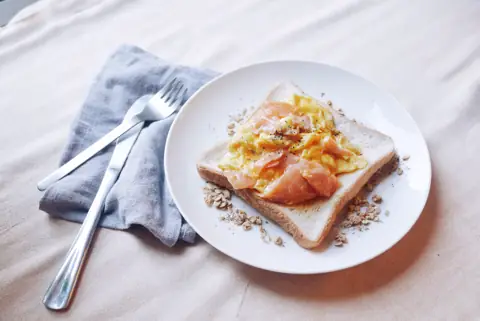
2 scrambled eggs on 1 slice of wholemeal toast, with tomatoes.
On the go
A pot of plain yoghurt, an apple and a small handful of unsalted nuts.
Weekend
Porridge with sliced banana and cinnamon, or a lighter cooked breakfast with poached eggs, grilled bacon medallions, beans and mushrooms. Grilling instead of frying keeps the familiar taste of a weekend fry-up with far less fat, and a spoon of beans adds fibre and a little extra protein.
What to keep an eye on
Granola, flavoured yoghurts and breakfast biscuits can carry as much sugar as a dessert. Fruit juice is also easy to overdo, so stick to 1 small glass with food. If your mornings are long and you still get hungry, our snack ideas cover mid-morning options, and our piece on protein needs shows how breakfast fits the daily total.
If you have diabetes or another condition that affects how you eat, follow the advice of your care team. This article does not replace advice from your GP or another health professional.
Breakfast is what we do
At Bamber Bridge Nutrition, breakfast is the heart of the club. Members come in from 6am on weekdays, eat together before work and leave set for the day. Book your free assessment and see how a morning there works.
Your weight loss curve
Fill in your details and the curve updates instantly.
Going at the median rate, losing 8 kg would need roughly 11 weeks. Going at the slowest rate, roughly 4 months.
For weight that stays off, the figure usually quoted is 500 g to 1 kg each week. On the chart, this is the ideal band. Losing more than 1 kg a week, week after week, means the body burns muscle as well as fat. On the chart, this is the shaded band.
This projection is only a guide. Everyone’s path is different and outcomes differ between people. Everything is worked out on your own device, and nothing gets stored or transmitted. If you are over 65, check with your GP before anything else.
How this curve is calculated
The upper line of the band stands for 500 g each week, the slowest rate. The lower line stands for 1 kg each week, where risk begins.
Early weeks move quicker, largely through water loss, and then things settle down. From 40 onwards the median curve eases off bit by bit as metabolism winds down. Putting in equal effort, men tend to lose a touch faster than women.
As in real life, the curve includes short stalls lasting a few days and the odd small gain. It cannot forecast how your own path will go.
These tips are general guidance. A doctor’s opinion still comes first.
Further reading

Day-to-day support is explained in our programme for eating more healthily.