Snacks to match your day. Ideas for early starts, long shifts and the evening

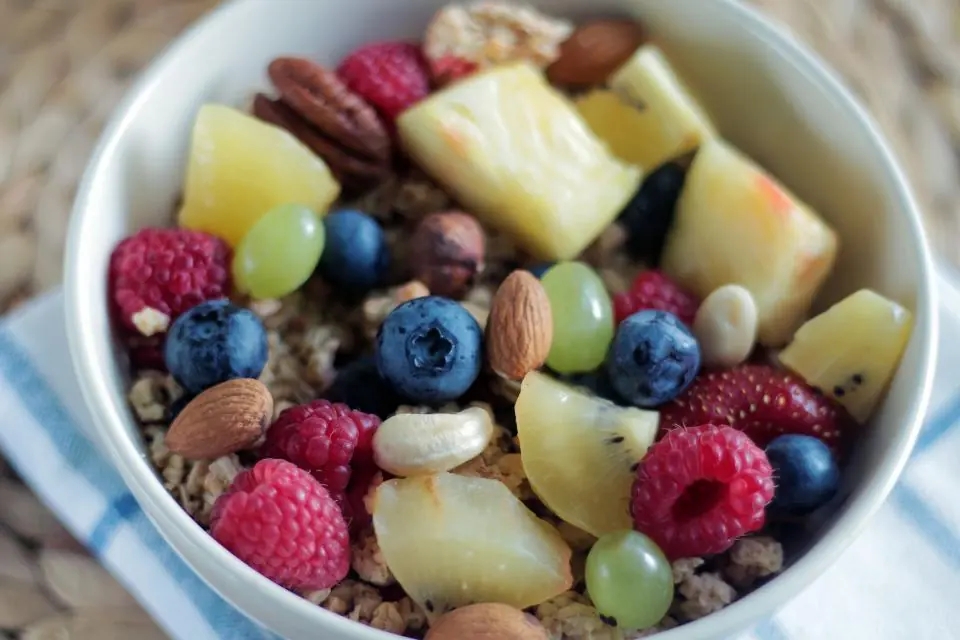
The best snacks for weight loss combine protein or fibre with fruit or vegetables, in a portion you decided on beforehand. A yoghurt and an apple, carrot sticks with hummus or a boiled egg will hold you far longer than a biscuit. The trick is to match snacks to the shape of your day.
A club coach goes through your situation with you and gives you practical advice.
Book your free assessmentIn this article
Do you need a snack at all?
If your meals hold you comfortably from one to the next, you do not need to add snacks. They help when there is a long gap between meals, for example a 6am breakfast and a late lunch, or during a long shift. A planned snack stops you arriving at the next meal so hungry that portions grow.
Snacks by day type
The early starter
Up at 5:30am and breakfast done by 6:30am? Lunch might be 6 hours later. A mid-morning snack such as a pot of plain yoghurt with berries, or a pear and a small chunk of cheese, keeps you going.
The long shift
For 10 or 12 hour shifts in a warehouse or on a production line around Walton Summit, pack snacks that travel well. A boiled egg, oatcakes with peanut butter, a banana, a small bag of unsalted nuts or roasted chickpeas.
The desk day
Keep fruit on the desk rather than in a bag. Carrot, cucumber or pepper sticks with 2 spoons of hummus satisfy the urge to crunch.
The evening
If you are truly hungry after tea, try a small bowl of plain yoghurt, a glass of milk, or a cup of soup. If you are not hungry, a hot drink often does the job. A cup of herbal tea also marks the end of the eating day.
Reading the packet
Cereal bars and flavoured yoghurts can look healthy and carry a lot of sugar. The NHS Healthier Families page on healthier snacks has quick ideas and tips on choosing packaged ones. Fruit and vegetables also count towards your 5 A Day. The NHS page on what counts as 5 A Day shows how.
Hungry or just bored?
Before reaching for food, ask yourself if an apple would do. If not, it is probably not hunger. Have a glass of water, take a short walk or wait 10 minutes. Our piece on feeling fuller for longer explains how meals can reduce the need to snack, and our guide to protein needs shows how snacks can top up your daily total.
This article does not replace advice from your GP or another health professional.
A breakfast that holds
A balanced breakfast is often the best snack prevention. At Bamber Bridge Nutrition, members eat breakfast at the club on weekday mornings before work, with coaches trained in nutrition on hand daily. Your free assessment is a good start.
Your weight loss curve
Fill in your details and the curve updates instantly.
Going at the median rate, losing 8 kg would need roughly 11 weeks. Going at the slowest rate, roughly 4 months.
For weight that stays off, the figure usually quoted is 500 g to 1 kg each week. On the chart, this is the ideal band. Losing more than 1 kg a week, week after week, means the body burns muscle as well as fat. On the chart, this is the shaded band.
This projection is only a guide. Everyone’s path is different and outcomes differ between people. Everything is worked out on your own device, and nothing gets stored or transmitted. If you are over 65, check with your GP before anything else.
How this curve is calculated
The upper line of the band stands for 500 g each week, the slowest rate. The lower line stands for 1 kg each week, where risk begins.
Early weeks move quicker, largely through water loss, and then things settle down. From 40 onwards the median curve eases off bit by bit as metabolism winds down. Putting in equal effort, men tend to lose a touch faster than women.
As in real life, the curve includes short stalls lasting a few days and the odd small gain. It cannot forecast how your own path will go.
These tips are general guidance. A doctor’s opinion still comes first.
Further reading

Day-to-day support is explained in our programme for eating more healthily.