Toned arms. A home routine and the eating habits that go with it


Toned arms come from 2 things working together, less fat across the whole body and stronger muscles in the shoulders, chest and back of the arms. Arm exercises alone will not remove fat from the area, but they shape what is underneath.
A club coach goes through your situation with you and gives you practical advice.
Book your free assessmentIn this article
What toned really means
Toned is not a medical word. People usually mean arms that look firm and do not wobble when they wave. That look depends on how much fat sits on top and how strong the muscles below are. The back of the upper arm is a common place for fat to settle, especially in women, and it often changes late.
A 15 minute home routine
Do this on 2 or 3 non consecutive days. A pair of full water bottles or tins of beans works fine as weights.
- Wall press ups. Hands on the wall at shoulder height, lower your chest and push back. 3 sets of 10.
- Chair dips. Hands on the edge of a sturdy chair, bend the elbows and push up. 3 sets of 8.
- Bottle curls. Elbows by your sides, lift towards your shoulders. 3 sets of 12.
- Overhead press. Push the bottles from shoulder height to above your head. 3 sets of 10.
- Bent over rows. Lean forward with a flat back and pull the bottles to your ribs. 3 sets of 10.
When 12 easy repetitions become comfortable, add more water or slow the movement down. Warm up first with arm circles and a few minutes of marching on the spot.
The rest of the body counts too
Because fat comes off the body as a whole, the arms benefit from everything else you do. Brisk walking, cycling and swimming all help. The British Heart Foundation suggests on its staying active page easy ways to build movement into the week. A stroll along the Ribble at the weekend counts.
Food that supports the work
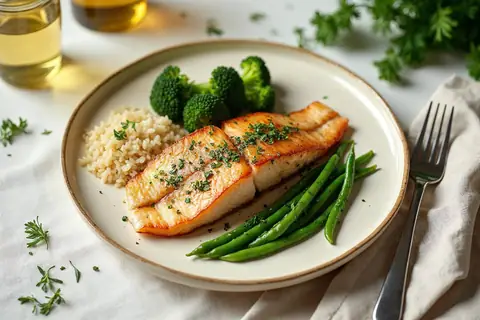
Regular meals with protein help the muscles recover after a session. Think eggs, yoghurt, fish, chicken, beans or lentils. Fill half the plate with vegetables, and keep sugary drinks and snacks for rare occasions. The NHS page on managing your weight gathers practical advice in 1 place.
About loose skin
After a large weight loss, some skin on the upper arms may stay loose. Strength work can improve the look of the area, but it cannot tighten skin completely. Losing weight gradually may give the body more time to adapt. If loose skin bothers you, ask your GP about the options.
How long it takes
Most people notice their arms feel stronger after 4 to 6 weeks of regular sessions. Visible change takes longer and depends on overall progress. For the full picture, see our article on the spot reduction myth and our guide on why muscle matters.
Strength starts at breakfast
At the club, members start the day with breakfast together, and the coaches trained in nutrition follow each person daily. A free assessment is a simple first step.
This article does not replace the advice of your GP or a health professional, especially if you have shoulder or joint pain.
Your weight loss curve
Fill in your details and the curve updates instantly.
Going at the median rate, losing 8 kg would need roughly 11 weeks. Going at the slowest rate, roughly 4 months.
For weight that stays off, the figure usually quoted is 500 g to 1 kg each week. On the chart, this is the ideal band. Losing more than 1 kg a week, week after week, means the body burns muscle as well as fat. On the chart, this is the shaded band.
This projection is only a guide. Everyone’s path is different and outcomes differ between people. Everything is worked out on your own device, and nothing gets stored or transmitted. If you are over 65, check with your GP before anything else.
How this curve is calculated
The upper line of the band stands for 500 g each week, the slowest rate. The lower line stands for 1 kg each week, where risk begins.
Early weeks move quicker, largely through water loss, and then things settle down. From 40 onwards the median curve eases off bit by bit as metabolism winds down. Putting in equal effort, men tend to lose a touch faster than women.
As in real life, the curve includes short stalls lasting a few days and the odd small gain. It cannot forecast how your own path will go.
These tips are general guidance. A doctor’s opinion still comes first.
Further reading

Day-to-day support is explained in our programme for eating more healthily.